
We interviewed Fray Ricardo Roque in Rayón (Chiapas). Until a few months ago he was the director of “La 72,” and he is currently a novice master in the province.
He welcomes us in a small office next to the church of this small town of just over 10,000 inhabitants. Fray Ricardo coordinated “La 72” for the past three years. We review this period with him and discuss his current challenges.
What is “La 72 Home/Shelter”?
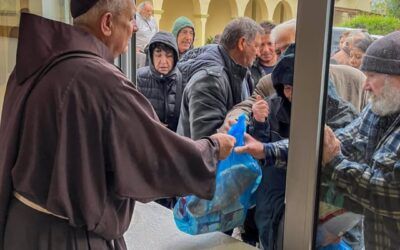
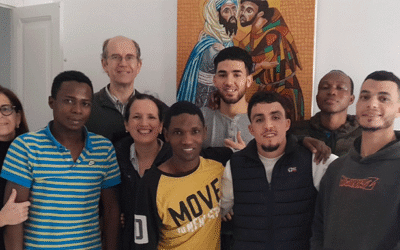
This shelter is like a sanctuary of humanity where Franciscan values are practiced, especially welcoming one’s brother without any distinction of race, color, or religion, and advocating for their human rights. In Mexico it is said that everyone has rights, but the reality is different, because the government, which should be concerned with guaranteeing these rights, does not provide access to health care, housing, work, education… so it is up to us to raise our voices for them, for people in transit.
How has this Home/Shelter changed?
The project has existed for 12 years as such, but assistance to migrants began 28 years ago. At first, only men arrived. Later, women and unaccompanied adolescents began to arrive. Until 2024, entire families came—many infants, pregnant women, and even people with disabilities. This year, with the re-election of Donald Trump, most of those arriving are once again men traveling alone.
What are they fleeing from?
There are many reasons: poverty, violence, climate change… We try to respond in a comprehensive way, and to do so we join forces with volunteers and organizations that come to collaborate.
What have the years you spent leading “La 72” been like?
During this time, we have been able to consolidate a structured system of areas within the shelter, such as the Human Rights area, which provides care and services to migrants who apply for refugee status in Mexico; the Humanitarian Aid area, for migrants in transit, where we provide lodging, food, or clothing; and the area for groups in situations of vulnerability, where we encounter very harsh realities that require medical or psychological assistance.
Another area is Structural Change. Here, a network of community defenders has been created to help or support us along the migratory route. There are other significant areas, but I believe these are the four pillars of the shelter.
What difficulties do people on the move face?
They suffer extortion from smugglers, assaults along the way… The most vulnerable are robbed, beaten, and stripped of everything. Sometimes even police forces, who should be protecting them, are the first to extort them. They also face forced disappearances, human trafficking, being turned into “mules” to transport drugs, recruitment by organized crime, physical assaults or abuse. And after all that, they enter Mexico and encounter another harsh reality of persecution and violence on their way to the northern border, as well as imprisonment and persecution. And deportations, even when they have legal status in the United States.
Is this what is known as reverse migration?
Yes. In Tenosique, small caravans of 15–20 people have been passing through in a steady trickle, mainly Cubans and Venezuelans who have been deported and are making the journey back.
In August, Mexico’s Ministry of Foreign Affairs stated that the migratory flow at the U.S. border dropped by 91%. What will happen in the future?
Migration will not stop. For now, as long as there is even one person who arrives, we will be there. Now in Rayón (Chiapas), as a novice master, what challenges do you face?
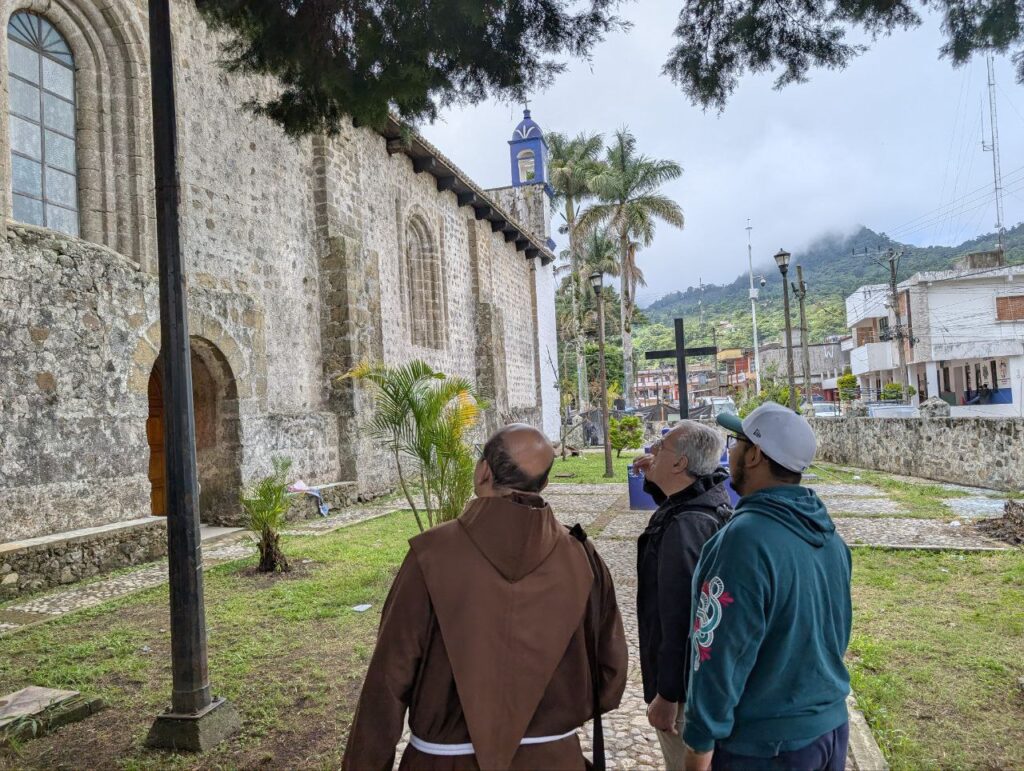
As is characteristic of the Franciscan Order, we are working on peace understood as dialogue between cultures, the defense of human rights, mediation in armed conflicts, prayer for peace, and care for the environment.
In this sense, we are focusing on an emerging project: the “Human Rights Center, La Selva Negra,” which aims to raise its voice against, for example, mining companies that pollute the environment, and also to address the physical, psychological, and sexual violence suffered by many women, the sale of girls, or forced marriages… we have a great deal of work to do regarding the dignity of women.
This is a project in which we will join forces with lay people, whether believers or non-believers, because working together is urgent.
Because human rights have no religion. We must act from every front.