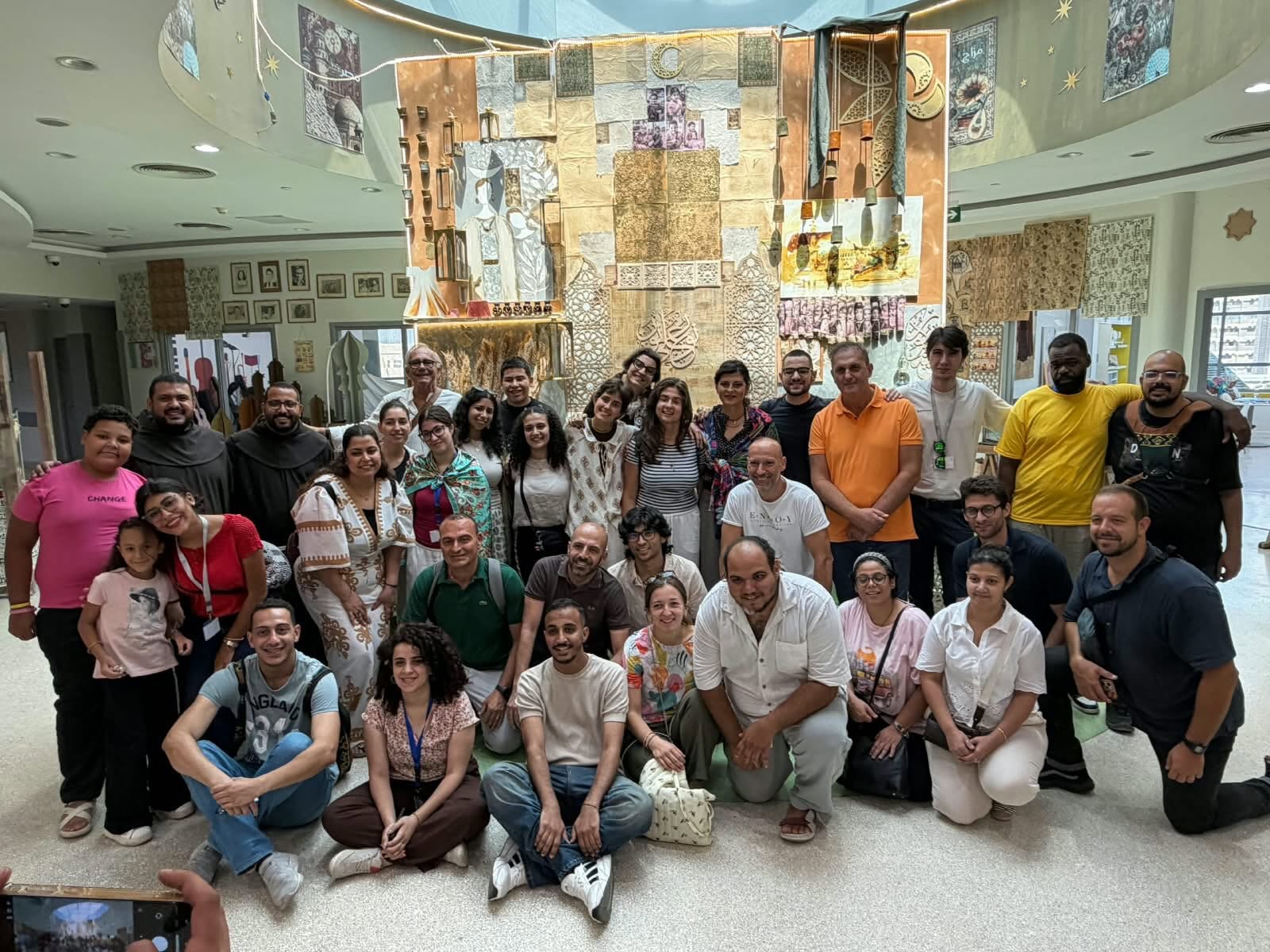
In the summer of 2026, Cairo hosted the second Oikos Summer School of 2026 —and the first of its kind dedicated to the Mediterranean. Seventeen young Italians joined fifteen Egyptian peers in Mokattam, embarking on a week-long journey of dialogue, creativity, and discovery. What emerged was a true “polyphony of diversity”, a living testament to the richness of Mediterranean culture.
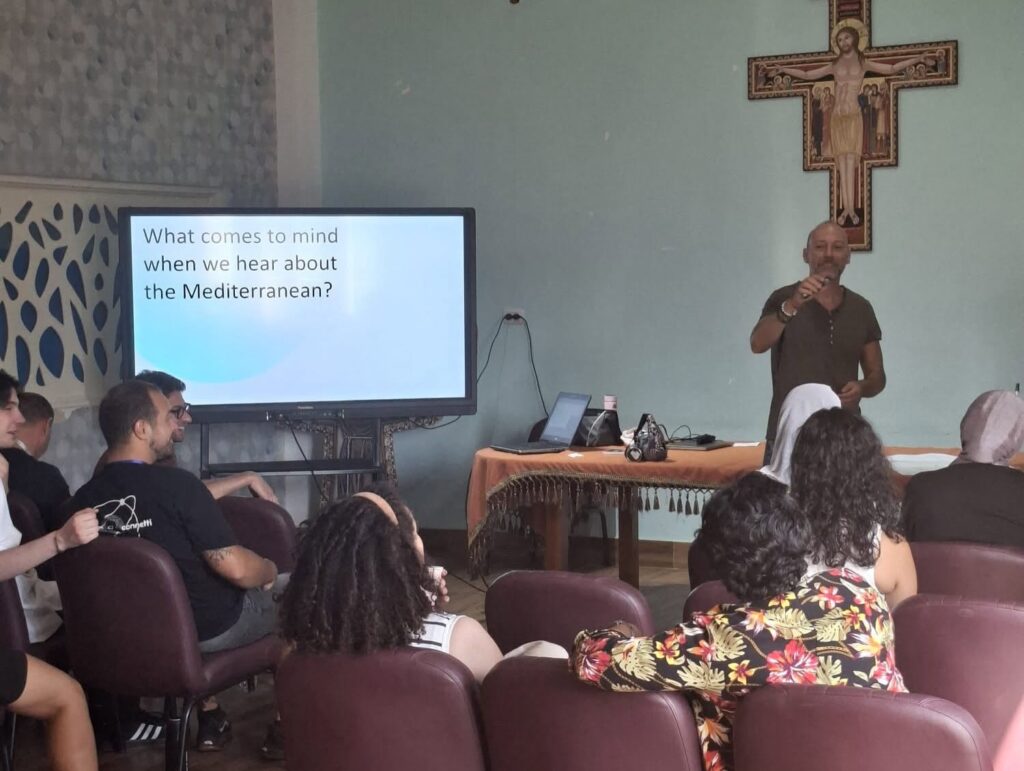
Sessions: Diversity and Mediterranean Identity: The program began with Dr. Marianne Mounir, who offered a profound presentation on Egypt’s diversity, setting the tone for the week’s cultural and religious explorations. Fr. Francesco Zecca introduced the vision of OIKOS Mediterraneo, encouraging participants to express themselves and reflect on the importance of preserving nature as part of Mediterranean identity. Fr. Farid guided the youth through Saint Francis’s Hymn of Creation, helping them confront fears, discover beauty in simplicity, and explore ways to cooperate in protecting the environment. The final lecture was delivered by Prof. Giuseppe Cecere, coordinator of the Italian Archaeological Center in Cairo, who explored Hasan ‘Uthmān’s Arabic translation of Dante’s Divine Comedy, focusing on the encounter between Saint Francis of Assisi and Sultan al-Malik al-Kāmil—a powerful symbol of interfaith dialogue
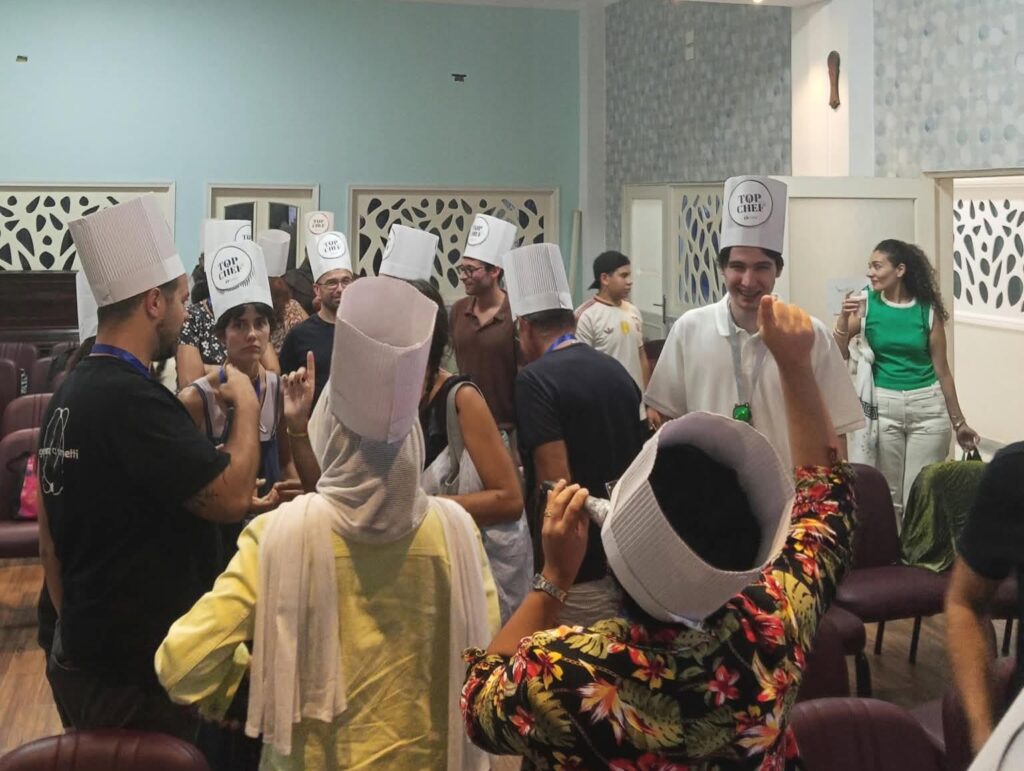
Workshops: Creativity Beyond Borders: The week was rich with interactive workshops designed to break barriers and foster collaboration. On the first day, a Top Chef competition brought together mixed Italian-Egyptian teams who prepared traditional dishes from both cultures, blending flavors and friendships. A Communication Workshop followed, where participants acted out experiences without translation, creatively overcoming language barriers.
At Al-Azhar, an Arabic Calligraphy Workshop offered Italian youth the chance to write Arabic words in different styles, immersing themselves in the beauty of the script. Two musical workshops added rhythm to the journey: the first, led by Maestro Carlo Morelli, a Neapolitan conductor and composer, invited participants to explore music as a universal language. The experience continued at the Cairo Pediatric Oncology Hospital, where the group shared music with children, creating bridges of joy and solidarity.
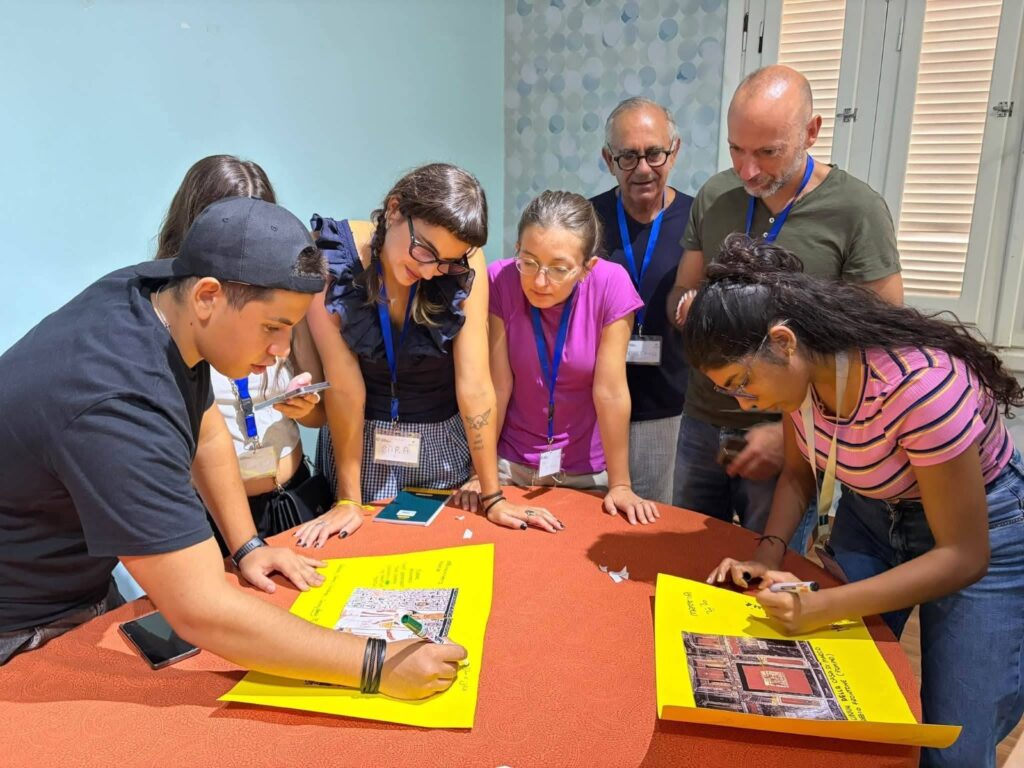
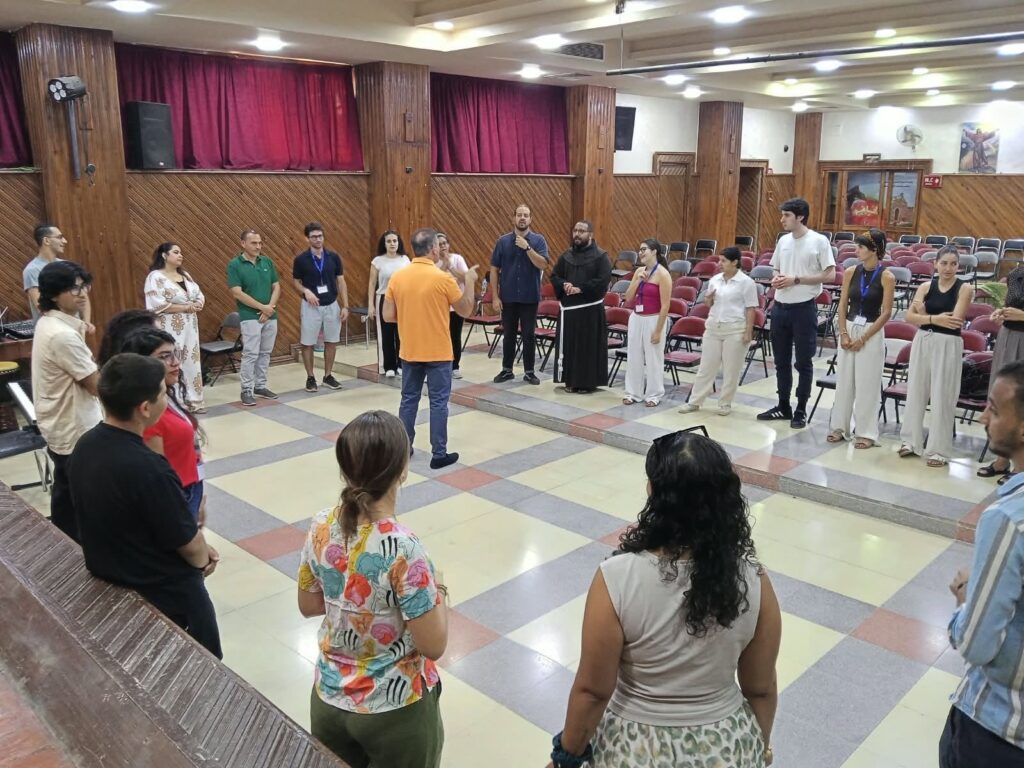
On last day, three creative workshops brought the week to a close with singing, listening to unique sounds from Egypt and Italy, and acting out diverse situations—an artistic celebration of intercultural dialogue.
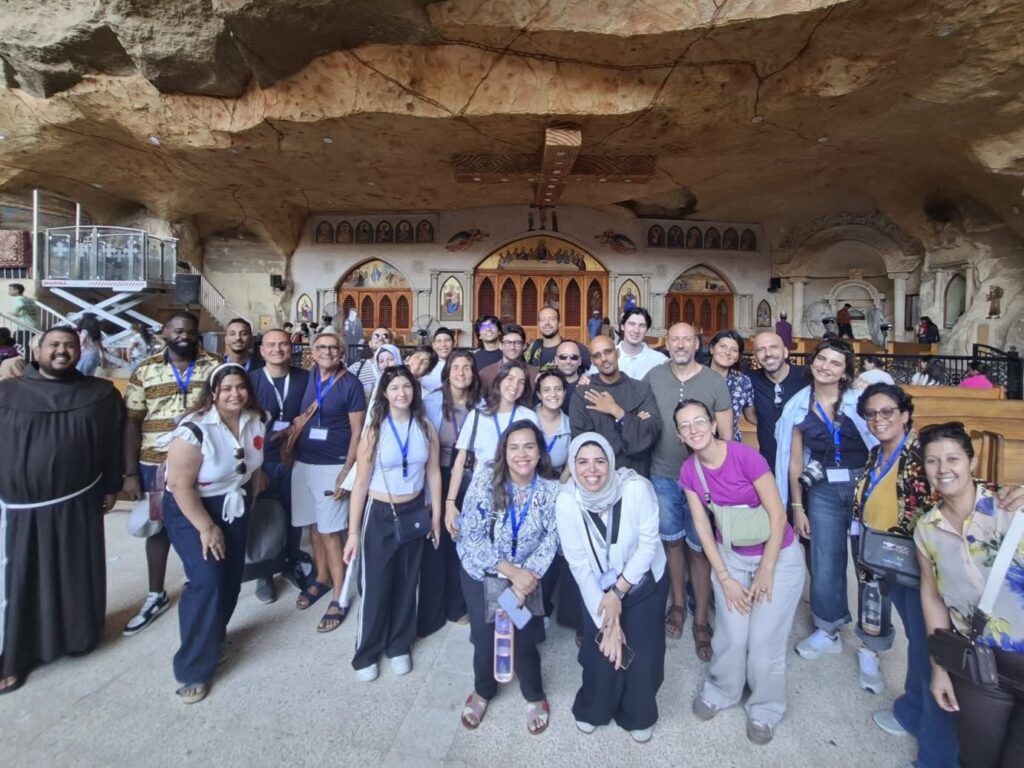
Cultural Visits: A Journey Through Egypt’s Heritage. The visits reflected Egypt’s millennial diversity: Saint Simon Monastery in Motakkam, the way to the monastery the young discovered the Garbage Collectors’ Neighborhood. The neighborhood is home to tens of thousands of residents (over 55,000 people). A visit to the National Museum of Egyptian Civilization provided a sweeping overview of Egypt’s history, connecting past and present. The Sultan Hassan Mosque (dating back to 1356) and the Al-Rifa’i Mosque (1912), highlighted Cairo’s monumental Islamic architecture. The group also explored Christian heritage at the Coptic Orthodox Church of the Virgin Mary and the Greek Orthodox Church of Saint George. A stop at the Ben Ezra Synagogue recalled Egypt’s Jewish legacy and its place in the country’s diverse cultural fabric. The “Mediterranean: Polyphony of Diversity” event concludes with a visit to the Pyramids of Giza and the Sphinx, symbols of a millennial history that continues to tell the complexity and richness of the Mediterranean.
An intense week of cultural diplomacy, meetings, and exchanges, experienced through direct confrontation with a different reality, capable of offering new perspectives, viewpoints, and opportunities for dialogue.
Marianne Mounir OFS. El Cairo (Egipto)