As RFMed, we have been invited to participate in the Med25belespoir project, consisting of 8 routes across the Mediterranean aboard the peace-schooner Belespoir with 200 young people from diverse nationalities, cultures, and religions. These young participants are committed to joining this “odyssey” of sailing its waters to foster encounter, dialogue, and the pursuit of Peace across this often-turbulent Mare Nostrum. The aim is to work for fraternity, hope, and justice for all human beings, rather than remaining self-referential, individualistic, or lost in despair. The goal is to help transform the Mediterranean from a mere graveyard into the cultural mosaic and space of welcome it once was—and can be again.
The Med25belespoir project began in March (from the 1st to the 15th) with its first stage: “Barcelona – Tetouan”, focused on the theme of “Intercultural Dialogue”.
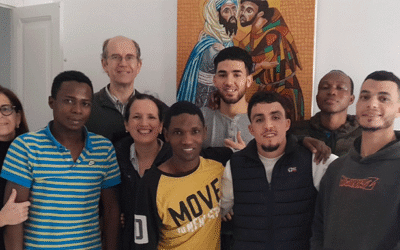
As RFMed, we contributed to this first stage by offering an “icon” representing the Encounter between Francis of Assisi and the Sultan in Damietta. This was a symbol that dialogue and encounter were indeed possible—even during the time of the Crusades and wars between Christians and Muslims. St. Francis—known for his love of creation and his desire to promote peace—did not see the Sultan as an enemy, but as a brother with whom to dialogue. His approach rejected violence and imposition, always seeking mutual respect and understanding.
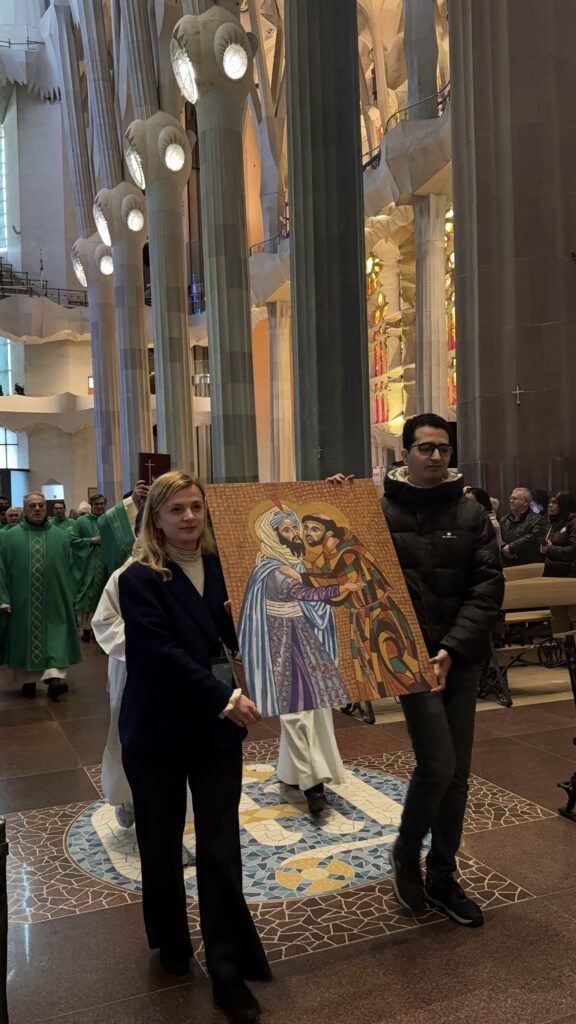
This encounter, which took place in 1219, represents to us a moment where faith and reason could meet on common ground—a symbol of hope in a world where religious differences need not lead to conflict but can instead inspire enriching dialogue. Through his attitude of humility and love, Francis of Assisi became a bridge between two cultures and religions, showing that the true mission of faith—whatever the faith—lies in building Fraternity and Peace.
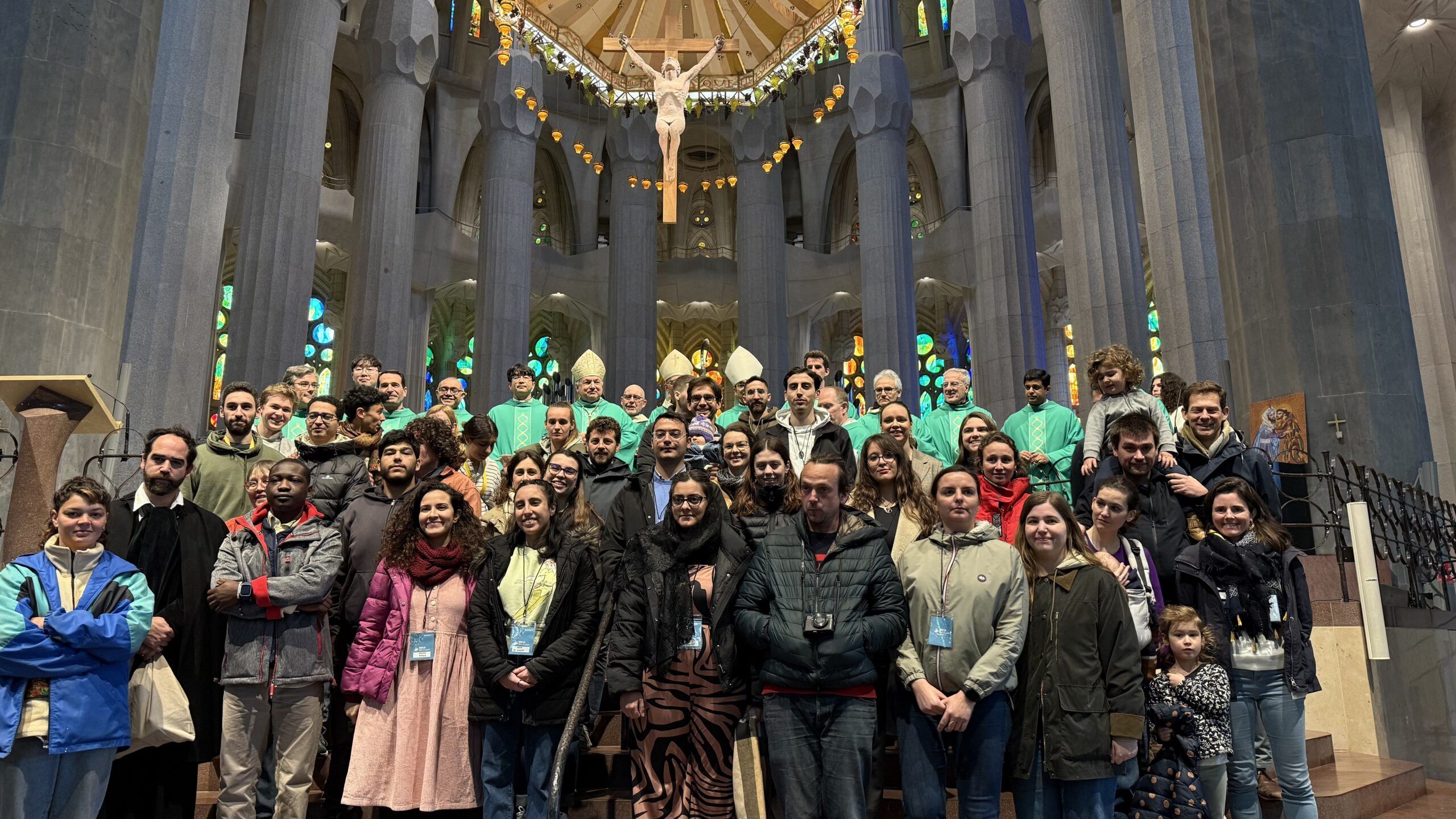
This icon was carried to the altar of the Sagrada Familia in Barcelona by a young Christian from Egypt and a young Muslim woman from Kosovo on Sunday, the 2nd, during the international Eucharistic celebration held at 9 AM, presided over by Cardinal Juan José Omella and Cardinal Jean-Marc Aveline of Marseille. The icon was then brought aboard the Belespoir, where it will remain throughout the voyage to accompany the seven other youth groups on the upcoming legs of the journey, concluding in October at the port of Marseille.
During this first journey, we were twenty young people from fourteen different nationalities, accompanied by two adults. On each itinerary, in addition to the sailing days—where participants help the crew with all necessary tasks aboard the Belespoir (hoisting and lowering sails, cleaning, cooking, washing dishes, group reflection work, etc.)—there are also encounters on land with other youth groups from both departure and arrival locations.
For this purpose, the twenty young participants were divided into three smaller working groups for shared reflection on: Cultural Dialogue; Education and Society; Women in the Mediterranean; Religion and Dialogue; Environment and Development; Migration Challenges; Christianity in East and West; and Peacebuilding.
It is also worth mentioning the existence of a Network of Contemplative Communities across the Mediterranean, which has committed to praying for the youth group at each stage and itinerary. In March, it was the Carmelite Sisters of Tangier who prayed for us and sent the group a bottle with a message inside, containing a QR code linking to a video clip with the following reflection:
Our life is like a journey; the way we travel, our route, and the stages of our journey are deeply shaped by our culture.
Through culture, we learn to express beauty and give form to creativity, to communicate our identity to the world.
Culture allows us to decipher the reality around us—but culture is a true richness only if we can recognize the beauty of other cultures. No single culture can contain the whole of reality, and no culture has a complete vision of life and humanity. Ultimately, no culture is sufficient on its own.
A culture closed to encounter is like a bird trapped in a cage: it will never learn to soar high and will only know its small, confined world. For every culture is a piece of the grand mosaic that is our world.
Complementarity lies in diversity. Embracing complementarity is laying the foundation for a peaceful world.
We must know in order to understand, and we must understand in order to love—with patience, without fear.
We wish you a good journey.
We will be praying for you.
Your Carmelite sisters of Tangier (from 9 countries and 4 continents)