1st Stage: Barcelona – Tetouan
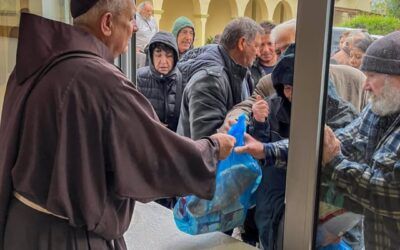
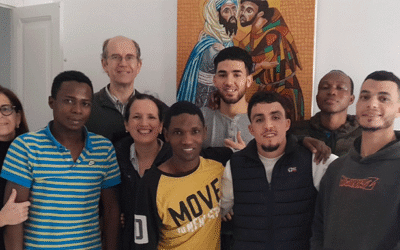
Med25belespoir Group at the Franciscan Fraternity of Tetouan
Interreligious Dialogue: Muslim University Professor
“The human being is a place of hospitality.” – Rumi
Taking up what Cardinal Jean-Marc Aveline said in Barcelona:
- Let us learn hope.
- Let us live fraternity.
- Let us cultivate friendship and trust.
- Let us bear witness to the love with which God loves the world.
- Knowing that hope is not vague optimism: it is a demanding choice.
Bishop Xabi Gomez:
- True dialogue does not seek to win, but to understand.
- “The key to this transformation, to learning, is this: understanding.”
- To develop a Mediterranean and intercultural awareness: a way of life (modus vivendi), a method, an approach; the ability to understand the other, a form of understanding hospitality.
Pope Francis, Message to the ICM, from St. John Lateran, September 26, 2022:
- “For what is dialogue in general, and interreligious dialogue in particular, if not a new way of considering the other? No longer as an abstract object of mission, but as a subject whom I address, a brother whom I seek and who lies beyond my cultural and religious boundaries.”
- “Accept going to know, but also the intelligence of knowing.”
“There will be no world peace without religious peace. There will be no religious peace without dialogue between religions.” – Hans Küng
- Global ethics project. World peace through peace among religions.
- There is no dialogue without education for dialogue.
Education: formation, transformation, conversion.
A method, a transformation.
- Culture is a worldview, a set of shared assumptions within a community that shares the same references.
- But this worldview appears opaque to outsiders and thus becomes an obstacle to intercultural understanding.
- Origin of indifference, absence of intercultural “care.”
Key attitudes toward otherness:
- Ethnocentrism: making one’s own culture the sole reference model.
- Prejudices: preconceived beliefs or opinions about others that may lead to discrimination.
- Stereotypes: “cliché” representations, simplifications and generalizations.
- Religious-based generalizations prevent genuine dialogue.
- From multiculturalism to interculturalism.
Multiculturalism adds differences and juxtaposes groups.
The logic of juxtaposition can lead more to exclusion and separation than to coexistence.
- Emphasis on rejection and exclusion behaviors, identity withdrawal.
- Differentialist fundamentalism.
In the multicultural model, minorities are more tolerated than respected or accepted.
- Interculturality: an interactive and understanding-based approach founded on interrelation and reciprocity among individuals or groups belonging to different cultures.
- Transcultural dialogue.
Openness to the other
- Mental openness or “mindfulness” and curiosity about foreign cultures.
- Receptive attitude and interactions with individuals from different cultures.
- Sensitivity to cultural differences and willingness to analyze situations and adapt to an intercultural context.
- Essential dimension: decentralization, stepping outside oneself.
- Acknowledging the existence of other “worldviews,” recognizing diversity of perspectives.
- Educating in hospitality and forming minds for mediation, in a pedagogy of proximity and conversation.
- Culture of hospitality: conversational closeness.
- The spirit of Mediterranean identity: “the spirit of conversation.”
- A practice of solidarity, recognition of one human being by another.
Empathy
- Understanding the other’s perspective.
- Putting oneself in the other’s place.
- A personal effort of curiosity to discover what gives meaning and value to the Other.
- An understanding hospitality.
- Becoming “the other’s guest,” leaving our own territory, crossing a boundary to enter the host’s domain.
- John B. Cobb calls this “passing over and coming back.”
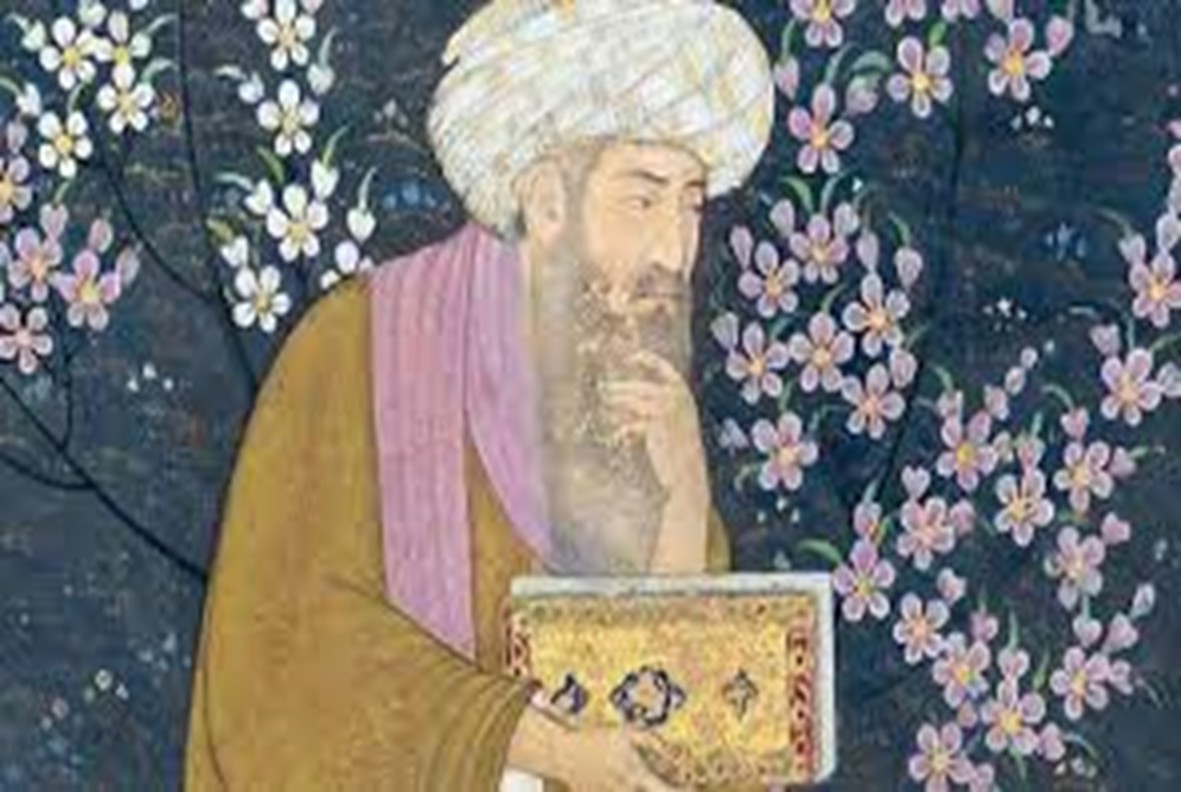
Poem by Jalal-od-din Rumi (1207–1273), Balkh, Turkey
“The human being is a place of hospitality (an inn),
Every morning a new guest arrives.
Treat each guest, whoever they may be, with respect,
Perhaps they are preparing you
For new delights.
Be grateful to whoever comes,
Whoever they may be,
For each one is sent as a guide from beyond.”
This beautiful text highlights the importance of welcoming and learning from every experience and encounter in life.
Ibn Arabi (1165–1240, Murcia–Damascus)
“Love is my religion”
My heart has become capable
Of every form.
It is a pasture for gazelles
And a monastery for monks.
It is a temple for idols
And the Kaaba for the pilgrim,
It is the Tablets of the Torah
And also the pages of the Qur’an.
I believe in the religion of Love,
Wherever its caravans turn,
For Love is my religion and my faith.
This magnificent poem expresses the depth of spiritual love and the idea that Love is a universal path transcending all religious and cultural forms. It highlights the universality of love as a spiritual force that overflows borders and differences and illustrates faith in divine unity.